


Tidio is a genuinely good first live-chat tool, which is exactly why so many teams hit its ceiling. The friction in 2026 is pricing and reach: the Lyro AI agent is billed per conversation, the jump from the Growth plan at about $49 a month to the Plus plan at $749 is steep with little in between, and there is no AI voice agent or real CRM. When your volume grows, the bill and the gaps grow with it.
We scored eight Tidio alternatives on six weighted criteria, set each up against real conversations, and read hundreds of recent G2, Capterra, Trustpilot and Reddit reviews so this is more than a feature list. The shift this reflects is real and measurable: a Freshworks case study documents a financial-services team moving from basic live chat to AI messaging, scaling chat volume roughly 10x at flat headcount and saving over 10,000 agent-hours. Gartner likewise found 91% of customer service leaders under pressure to deploy AI in 2026. Here is the whole field at a glance, with an honest pick for every team below.
Quick decision table
Skim this first. Prices are the entry paid tier, as of June 2026, unless noted. Ratings are from G2. Tidio is shown at the top as the tool you are replacing.
| Tool | Best for | Standout | Watch out for | Starts at | G2 |
|---|---|---|---|---|---|
| Tidio (now) | Easy SMB live chat with basic AI | Simple setup, Lyro AI | Per-Lyro pricing + $49 to $749 cliff | Free, then ~$25/mo | 4.6 |
| sem.chat | AI-first SMBs wanting voice + text + CRM | Real-time AI voice and a built-in CRM | Newer; not enterprise ticketing | Free, then $24/mo flat | New entrant |
| Intercom | AI-first support at scale | Fin AI agent maturity | Outcome pricing is hard to forecast | $29/seat/mo + $0.99/Fin | 4.5 |
| Crisp | Flat-priced all-in-one messaging | Flat per-workspace pricing | Lighter automation depth | Free, then $45/mo flat | 4.1 |
| Freshchat | Omnichannel messaging teams | WhatsApp, Instagram, SMS breadth | Freddy AI is assist-only | $19/agent/mo (free to 10) | 4.5 |
| LiveChat | A simple, classic live chat | Fast, reliable real-time chat | Per-seat; AI is a paid add-on | $19/seat/mo | 4.5 |
| Tawk.to | The tightest budgets | Genuinely free, unlimited agents | Dated UI, notification delays | Free (paid add-ons) | 4.5 |
| Gorgias | Shopify and BigCommerce stores | Deep ecommerce integrations | Per-ticket and double-billed AI | $10/mo (per-ticket) | 4.6 |
| Zoho SalesIQ | Budget buyers, especially Zoho users | Cheap, strong visitor tracking | Notifications, sales-leaning | Free, then $11/operator/mo | 4.4 |
Sources: Gartner (AI pressure), IBM (AI chat vs human cost), Forrester (live chat ROI), Freshworks (proactive chat ROI and the switch case study), Nextiva (chat conversion).
Why teams outgrow Tidio in 2026
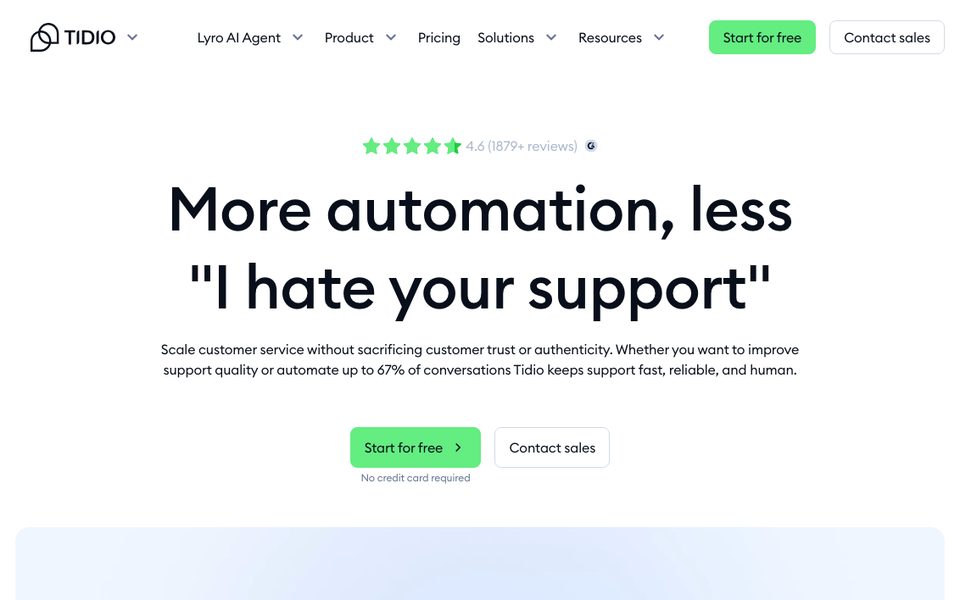
Tidio is not bad software. It is one of the easiest live-chat tools to set up, the widget is friendly, and Lyro can deflect a real share of routine questions. The friction shows up for growing teams in three places. First, pricing predictability: Lyro is billed per conversation, so the better it performs, the more you can pay, and the leap from Growth at about $49 to Plus at $749 leaves mid-sized teams stranded. Second, reach: there is no real-time AI voice and no true CRM, so Tidio stays a chat widget rather than a support-and-sales platform. Third, depth: the free plan's Lyro allowance is a one-off 50 conversations that never resets, AI training cannot pull from sources like Google Drive, and reviewers describe a wall between Flows and Lyro that makes bot-to-human handoff feel rough.
- The free plan's Lyro allowance is 50 lifetime AI conversations that never reset, so teams hit the wall quickly and are pushed onto a paid plan. (Tidio docs)
- The advertised $49 Growth plan realistically lands near $105 to $150 a month once Lyro (about $32.50) and Flows (about $24) are switched on. (CheckThat.ai)
- Conversation metering auto-bumps your tier near 95% usage, and the jump from Growth to the $749 Plus plan has no middle option. (Chatarmin)
- A December 2024 pricing change doubled some existing bills (roughly $32 to $64) with little warning. (CheckThat.ai)
- Reviewers describe a wall between Flows and Lyro that blocks smooth, context-aware handoff from the bot to a human agent. (Zipchat)
- Tidio sits around 3.7 to 4.0 on Trustpilot versus 4.6 on G2, with pricing the most-cited drawback, and many leavers move to flat-priced tools. (eesel)
None of that makes Tidio a mistake. It makes it a starting point. If you only need a slightly better chat widget, a couple of options below do that cheaply. If you want to genuinely modernize, look for AI that resolves across channels, pricing you can predict, and a platform that also holds your customer data.
How we scored the 8 tools
We scored every tool out of 100 across six weighted criteria, then matched each to the buyer it actually fits. The weighting favors what 2026 chat and support buyers tell us they care about most: AI that works and pricing that does not surprise them. Tidio is shown as a reference so you can see the bar you are starting from.
One caveat on our own score: sem.chat ranks first on the weighted blend because it is strong on AI, channels, CRM and price, but it scores lowest of the group on enterprise scale and review track record. If you run a large contact center, that matters more than the total, and Intercom is the safer pick. Read the scores against your situation, not in the abstract.
The real cost reality
Headline prices and real prices are different animals in this category. The chart below estimates the actual monthly cost of a roughly 10-agent setup once you turn on the AI each tool needs to feel modern. It is the clearest single reason teams leave Tidio: per-conversation and per-seat pricing compound, and Tidio itself jumps to its $749 Plus tier at scale, while a flat plan does not move.
The pattern reviewers describe is consistent: Tidio's base price looks cheap until operators, Lyro and Flows stack the bill toward $300+ a month, and Intercom quotes can reach roughly $2,000 a month for a small team. On Intercom, reviewers document a realistic 10-seat setup near $2,040 a month and Reddit bills climbing from $4,000 to $9,000; on Gorgias, a fully AI-resolved ticket is billed twice. A flat, per-workspace plan removes that anxiety. Here is how the tools sit on price versus AI and all-in-one breadth.
Feature comparison matrix
This is where the differences get concrete. Note the rows almost no chat tool can tick: real-time AI voice and a built-in CRM.
| Capability | sem.chat | Intercom | Crisp | Freshchat | LiveChat | Tawk.to | Gorgias | Zoho |
|---|---|---|---|---|---|---|---|---|
| AI chat bot (RAG-grounded) | Yes | Yes | Yes | Yes | Partial | Partial | Yes | Yes |
| Real-time AI voice agent | Yes | No | No | No | No | No | No | No |
| WhatsApp + Instagram + Telegram + Messenger | Yes | Partial | Yes | Yes | Partial | Partial | Partial | Partial |
| Slack channel | Yes | Partial | Partial | No | No | No | No | No |
| Unified inbox + human handoff | Yes | Yes | Yes | Yes | Yes | Yes | Yes | Yes |
| Built-in CRM (deals, pipelines) | Yes | No | Partial | No | No | Partial | No | Partial |
| Scheduling and booking | Yes | No | No | No | No | No | No | No |
| White-label widget | Yes | No | Partial | Partial | No | Yes | No | Partial |
| Flat pricing (not per seat or per chat) | Yes | No | Yes | No | No | Yes | Per ticket | No |
| Free plan | Yes | No | Yes | Yes | No | Yes | No | Yes |
| Ecommerce / Shopify depth | Partial | Partial | Partial | Partial | Partial | Partial | Yes | Partial |
The 8 best Tidio alternatives
1. sem.chat - best AI-first all-in-one for SMBs
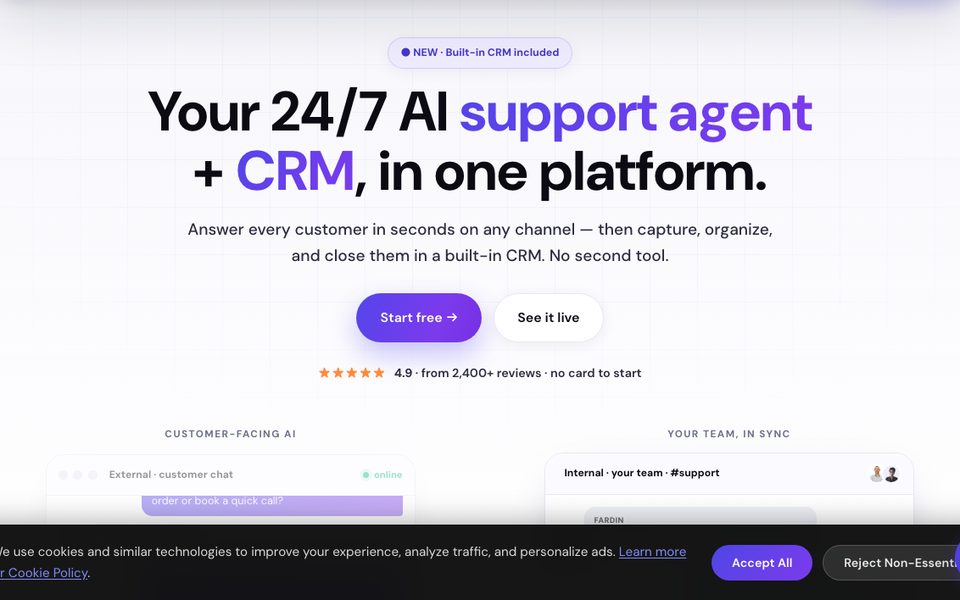
sem.chat is an AI customer support agent and a CRM in one platform, built for small and mid-sized teams that want to replace Tidio's per-conversation Lyro pricing with a single flat subscription. It is the only tool in this comparison that pairs a text chatbot with real-time AI voice agents, so customers can literally talk to your AI, plus a full built-in CRM.
What stands out: an AI chatbot trained on your own content with a knowledge base you can build by pasting your website URL; real-time voice agents with 12 stock voices, optional voice cloning and beta talking avatars; a unified inbox spanning the website widget, WhatsApp, Instagram, Telegram, Messenger and Slack with smart human handoff and in-inbox auto-translation; a Calendly-style scheduling module; and a genuine CRM with deals, pipelines, tasks, quotes, invoices and e-signatures. You can white-label the widget and connect HubSpot, Salesforce or webhooks. See the full feature list for the detail.
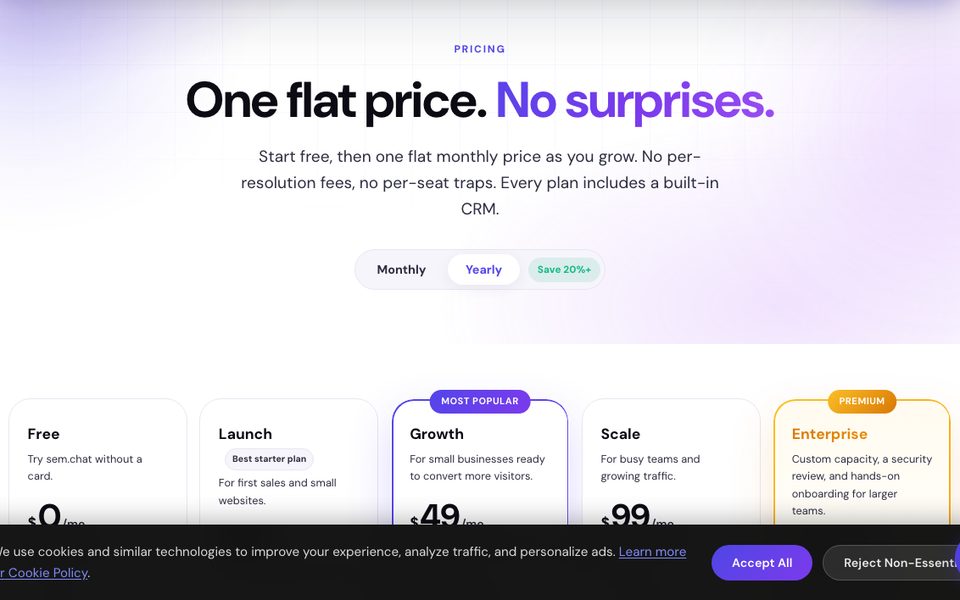
Pricing (as of June 2026): a free plan with no card required, then flat tiers of Launch $24, Growth $59 and Scale $119 per month, with custom Enterprise pricing. Pricing is per workspace, not per conversation, which is the core difference from Tidio's Lyro model. Compare the tiers on the pricing page.
2. Intercom - best AI bot at scale
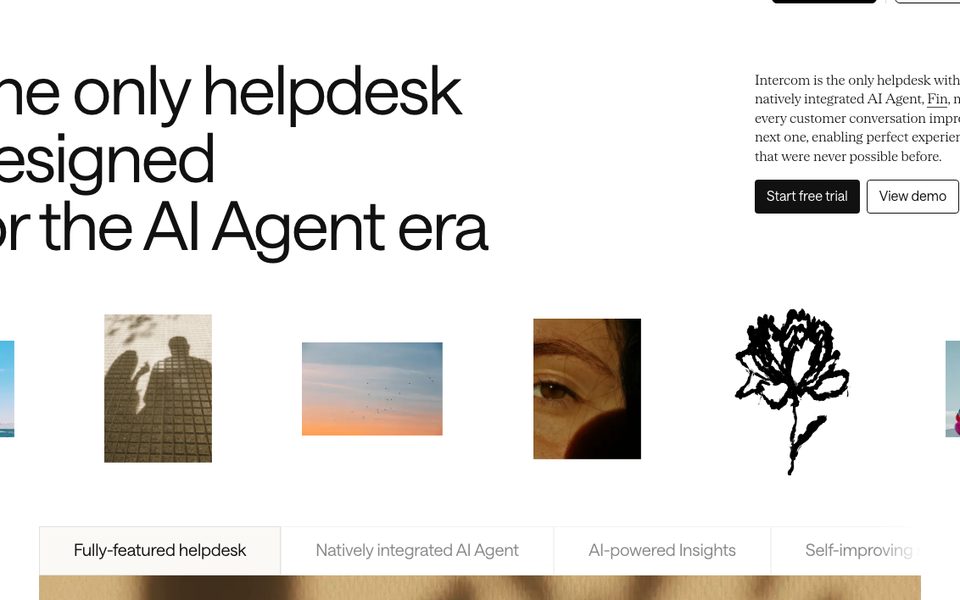
Intercom is the benchmark for AI-led support in product-led SaaS. Its Fin AI agent is widely regarded as the most capable resolution bot in the category, and the unified inbox across email, chat, SMS and WhatsApp is polished. If your priority is the best possible bot and you can absorb the cost, Intercom is hard to beat.
Pricing (as of June 2026): Essential $29, Advanced $85 and Expert $132 per seat per month, plus Fin at $0.99 per resolution. The most-cited complaint is exactly that outcome model: as Fin gets better, the monthly bill becomes harder to forecast.
- A widely shared Reddit account describes an Intercom bill climbing from about $4,000 to $9,000 a month as Fin's per-resolution fee and channel add-ons stacked up. (ClearFeed (Reddit))
- A realistic 10-seat Advanced setup runs near $2,040 a month once 1,000 Fin resolutions and messaging are added, roughly 2.4x the headline seat price. (Chatarmin)
- The 20 complimentary Lite seats on Advanced cannot answer customers, and crossing the cap quietly triggers an upgrade. (Voiceflow)
- Intercom raised the Essential monthly rate from $29 to $39 in 2026, so month-to-month testers pay more. (SaaS Price Pulse)
- Beyond licensing, Fin needs ongoing upkeep of help articles, macros and seat hygiene, a maintenance burden teams underestimate. (ClearFeed)
- Small teams under roughly 500 conversations a month frequently report the pricing does not fit and switch to cheaper desks. (Automaiva)
3. Crisp - best flat-priced all-in-one
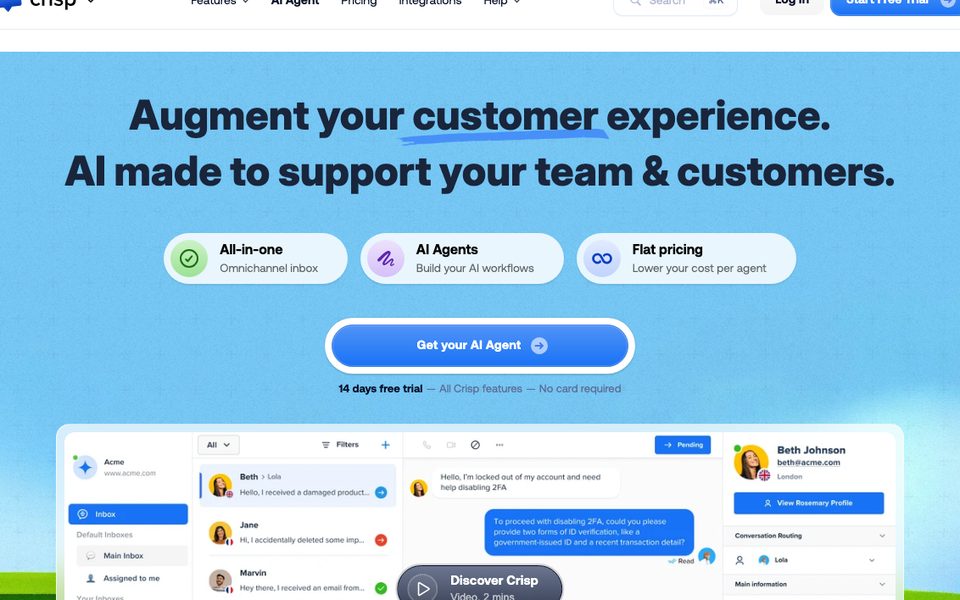
Crisp is the closest pricing-model peer to sem.chat: an all-in-one inbox (chat, email, chatbot, knowledge base, co-browsing) sold at a flat per-workspace rate rather than per seat. For a small team juggling several products, that flat model is the headline draw, and Crisp openly markets it. Its honest limit is depth: automation and AI are lighter than Intercom or sem.chat, and some reviewers flag notification reliability.
Pricing (as of June 2026): a free plan for 2 agents, then Mini $45, Essentials $95 and Plus $295 per month, billed per workspace with bundled AI conversation packs. G2 rates it about 4.1.
- The permanent free tier (2 seats, unlimited conversations) is genuinely useful for testing, unlike trial-only rivals. (FeatureBase)
- Flat per-workspace billing saves roughly 50 to 67% versus per-seat tools for a 10 to 20 person team. (FeatureBase)
- The Essentials plan caps AI at about 50 uses a month, pushing teams to the EUR 295 Plus tier for unlimited AI. (FeatureBase)
- Because billing is per workspace, running three separate products roughly triples the cost (around EUR 885 a month). (BunnyDesk)
- Multiple users report unreliable message notifications that occasionally cause missed support requests. (Hack'celeration)
- Crisp scores 4.5 on both G2 and Capterra, with support rated about 9.0/10, among the highest in the category. (CheckThat.ai)
4. Freshchat - best for omnichannel messaging
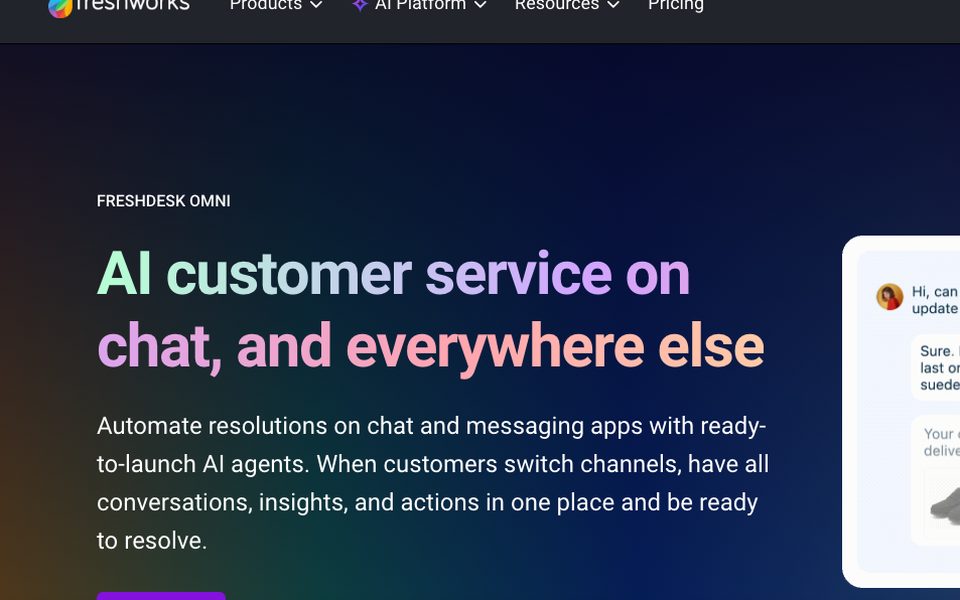
Freshchat from Freshworks is the omnichannel pick: one inbox across the website, WhatsApp, Instagram, SMS, email and more, with Freddy AI assisting agents. If you live across messaging apps and already use Freshworks, the fit is natural. The honest limit is that Freddy is an assistant rather than a standalone resolution bot, and there is no native no-code chatbot builder.
Pricing (as of June 2026): a free plan for up to 10 agents, then Growth $19, Pro $49 and Enterprise $79 per agent per month, with the Freddy Copilot add-on around $29 per agent. G2 rates it 4.5.
- Freddy Copilot (about $29 per agent) is an agent assistant that suggests replies, not a standalone resolution bot. (eesel)
- The autonomous Freddy Agent shows real-world resolution closer to 23 to 75% versus the 80% marketing claim, and it tends to answer only the first message in a thread. (MyAskAI)
- Plans include about 500 Freddy sessions a month; extra sessions cost roughly $100 per 1,000, so a busy site adds around $150 in overage. (eesel)
- Sessions expire monthly with no carryover, and if they run out mid-month the AI simply stops until you buy more. (Freshworks docs)
- Freddy trains only on the Freshworks knowledge base, so teams whose docs live in Google Drive or Notion are stuck. (MyAskAI)
- WhatsApp and SMS carry separate per-message charges through the messaging backend, making multi-channel bills unpredictable. (eesel)
5. LiveChat - best classic live chat
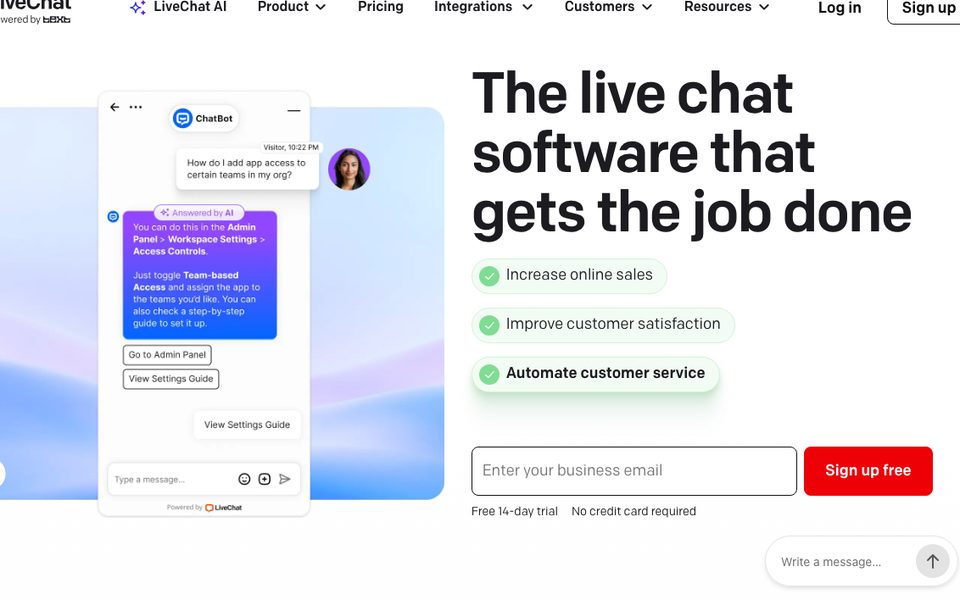
LiveChat is the dependable, classic live-chat tool: fast, polished, and focused on real-time visitor conversations and routing. For teams that mainly want humans chatting well (with AI optional), it is a safe choice. The honest limits are the per-seat cost and that real automation lives in the separate ChatBot product, so an AI-first setup costs more than the headline.
Pricing (as of June 2026): Starter $19, Team $49 and Business $79 per seat per month, with the ChatBot add-on around $52 per month. G2 ratings sit around 4.5.
- Reviewers report the system disconnecting and incoming chats failing to trigger notifications, so agents miss conversations without realizing it. (Capterra)
- Billing is mandatory per agent with no seat-sharing, so a five-agent team pays for five seats even when working in shifts. (Tooltester)
- A five-agent AI setup approaches about $240 a month once the ChatBot add-on (around $52) and other modules stack on top of seats. (FastBots)
- The platform auto-scales charges up when you add agents but does not reduce them when agents are suspended. (Trustpilot)
- Some users report being charged for months after cancelling, with refunds refused. (Capterra)
- LiveChat handles chat well but pushes email, voice and WhatsApp into separate integrations rather than one inbox. (Hiver)
6. Tawk.to - best free live chat
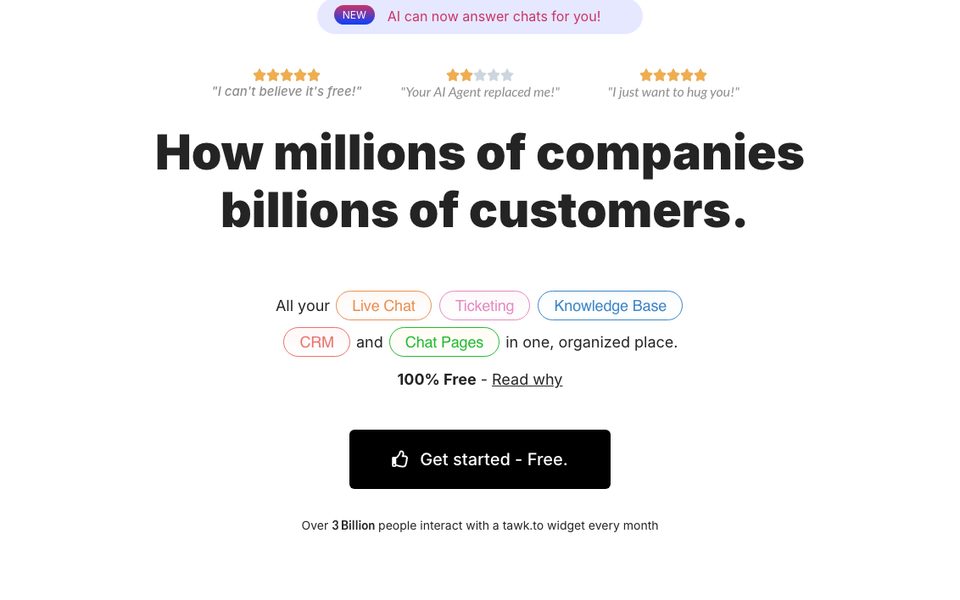
Tawk.to is the answer to "can I just use something free?" It offers unlimited agents and chats at no cost, with a hosted knowledge base and basic CRM. For a bootstrapped team, it is hard to argue with zero. The honest trade-offs are a dated interface, frequently reported notification delays, and that the polished extras (removing branding, AI Assist) are paid add-ons.
Pricing (as of June 2026): free forever for the core product; removing branding is around $29 per month, AI Assist starts around $29 per month, and hired agents are billed hourly. G2 rates it 4.5.
- The core product is genuinely free with unlimited agents and chats, which most small teams use without paying a cent. (Capterra (4.6))
- Mobile push notifications often arrive 30 to 60 minutes late or not at all, and Do Not Disturb can re-enable itself, causing missed chats. (Capterra)
- The dashboard feels dated and cluttered, with a steeper learning curve than newer tools. (Blogvault)
- Free comes with asterisks: removing branding is about $29 a month, AI Assist about $29, video and voice about $29, and hired agents are $1 an hour. (Blogvault)
- AI Assist is a basic reply helper rather than a standalone chatbot, and the free plan includes only about 100 AI credits a month. (Tawk.to)
- Support is slow and English-only, which can frustrate non-English teams. (Trustpilot)
7. Gorgias - best for Shopify ecommerce
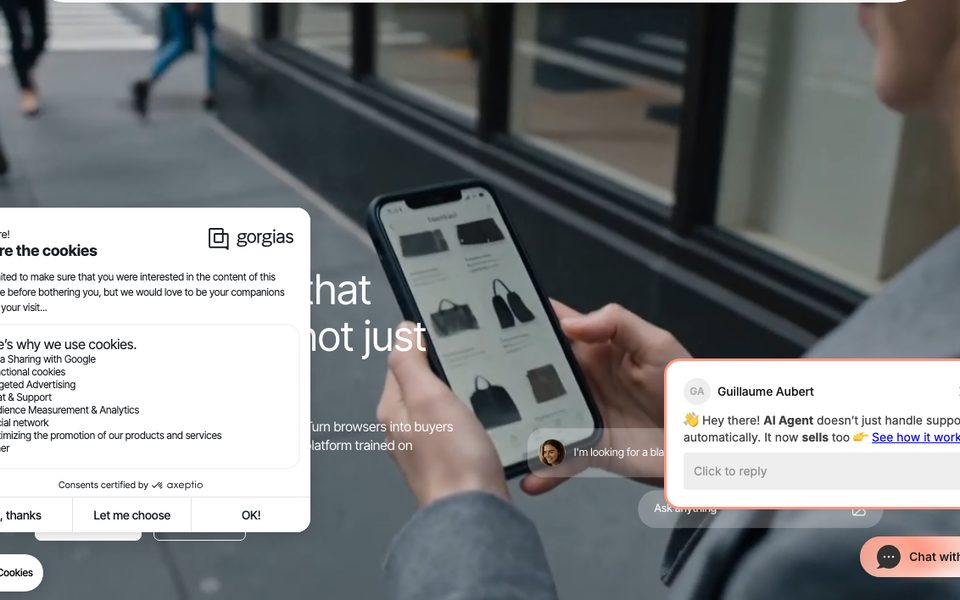
Gorgias is purpose-built for online stores. Its native Shopify and BigCommerce integrations pull order and product data straight into the conversation, and its AI agent can handle returns, refunds and order status. G2 rates it 4.6. The cautions are pricing and AI billing.
Pricing (as of June 2026): Starter $10, Basic $50, Pro $300 and Advanced $750 per month on a ticket-based model, with the AI agent billed around $0.90 to $1.50 per resolved chat. Reviewers note AI resolutions can be billed twice.
- A fully AI-resolved ticket is billed twice, as both a helpdesk ticket and a $0.90 to $1.50 AI resolution, so a $360 plan at 50% automation can become about $960. (Zipchat)
- Real automation lands around 26 to 56% (not the marketed 60%) and response accuracy sits near 59%, below the roughly 71% category average. (MyAskAI)
- The deep Shopify and BigCommerce sync lets agents edit orders, issue refunds and manage subscriptions inside the ticket, which ecommerce teams love. (G2 (4.6))
- One merchant on a roughly $13,500-a-year plan reported about $14,000 in added AI fees after switching automation on. (Ringly)
- Seasonal spikes hit hard: a $300 Pro plan reportedly jumped to about $1,038 during a Black Friday surge. (Hellorep)
- Support draws complaints (Trustpilot around 2.5/5), and tickets can loop in automation without escalating to a human. (Trustpilot)
8. Zoho SalesIQ - best budget and Zoho pick
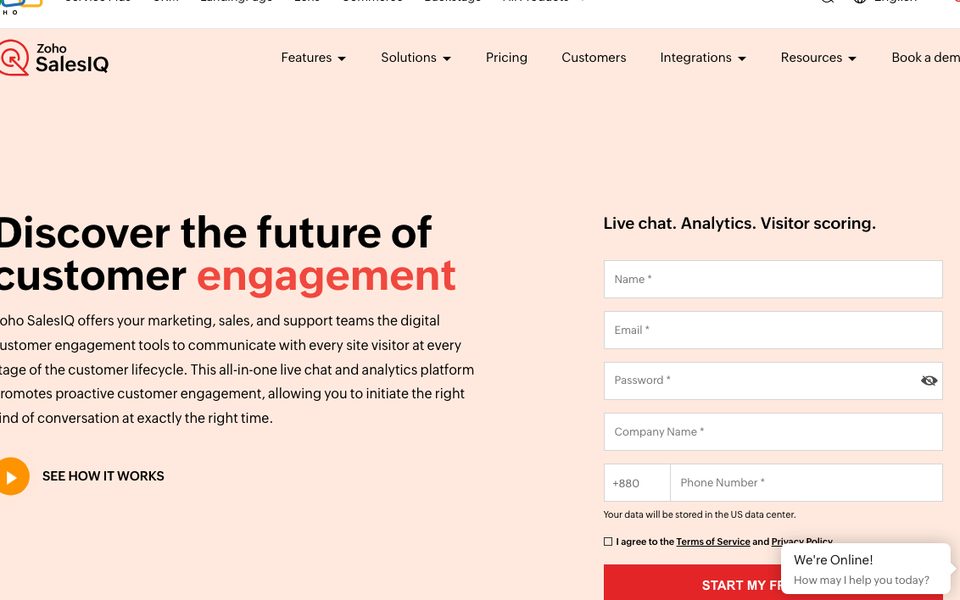
Zoho SalesIQ is the value-and-ecosystem pick. It is inexpensive, strong on real-time visitor tracking and lead scoring, and tightly tied to Zoho CRM. If you already run Zoho, the integration is the reason to choose it. The honest limits are notification reliability, a sales-first rather than support-first design, and an Answer Bot that trails Lyro and Freddy.
Pricing (as of June 2026): a free plan for 3 operators, then Basic $11, Professional $19 and Enterprise $27 per operator per month. G2 rates it 4.4.
- It is cheap (about $10 to $25 per user) and strong on real-time visitor tracking, especially inside Zoho One. (Capterra (4.4))
- Notifications turn themselves off and audio alerts stop, so teams miss incoming queries. (Findstack)
- The native ZIA Answer Bot works only in English, and reviewers say it often answers the wrong question despite training. (Capterra)
- Getting the most out of it means committing to the Zoho suite, and it lacks native Make or Zapier connections. (Chatimize)
- Chatbot counts are capped by tier (1, 5 or 10), and large flows quickly become hard to manage. (ITQlick)
- The product leans toward sales and lead capture, so support-first teams find it less tailored than dedicated help desks. (Findstack)
How to choose the right one
Map your situation to a pick instead of chasing the highest score.
Whatever you shortlist, run a real pilot on your own conversations before you commit. Vendor demos look perfect; your edge cases do not. If you want pre-built support and CRM playbooks to test with, browse our free templates.
sem.chat vs Tidio, head to head
Since you are here to replace Tidio specifically, here is the direct comparison on the dimensions that drive the decision.
The pattern is clear: sem.chat wins on AI breadth, voice, CRM and predictable cost; Tidio wins on being the simplest, most familiar starting point. If you only need a basic chat widget, Tidio is fine. If your volume is growing and the Lyro bill or the missing CRM is starting to bite, sem.chat is built for that next step. You can sanity-check the staffing math with our live chat staffing calculator and the savings with the SaaS cost savings calculator.
Migrating off Tidio
Switching is less scary than it looks, but be honest about the work. A clean migration is usually a few days, not weeks, if you plan it.
| Step | What to do | Honest friction |
|---|---|---|
| 1. Export | Pull contacts, canned replies and chatbot flows from Tidio | Lyro and Flows logic does not export 1:1 |
| 2. Rebuild knowledge | Point the new AI at your website or help-center URL | You will prune and re-tag content as you go |
| 3. Recreate flows | Map Tidio Flows to the new tool's automations | Complex branching takes the most time |
| 4. Run in parallel | Keep Tidio live for about a week while you cut over | Brief double cost during overlap |
| 5. Retrain the team | Short sessions on the new inbox and handoff | Expect a week of muscle-memory adjustment |
Frequently asked questions
Is there a free Tidio alternative?
Yes. Tawk.to is fully free with unlimited agents, and sem.chat, Crisp, Freshchat and Zoho SalesIQ all offer free plans. sem.chat's free plan needs no credit card. The trade-off with free tools is usually AI depth and channel breadth.
What is the cheapest Tidio alternative?
On pure price, Tawk.to is free and Zoho SalesIQ starts around $11 per operator. On total predictable cost for a growing team, sem.chat's flat $24 per month (not per conversation) is often cheaper than Tidio once Lyro and extra operators are added, because it does not scale with volume.
What is the best Tidio alternative for a small business?
For most SMBs we recommend sem.chat, because one flat subscription covers AI chat, AI voice, multiple channels, scheduling and a CRM. If you want a flat-priced all-in-one without voice or a CRM, Crisp is an excellent pick; if you want the simplest free option, Tawk.to.
What is the best AI Tidio alternative?
sem.chat and Intercom are the two most AI-forward options. sem.chat is unique in offering real-time AI voice agents alongside text and a CRM; Intercom's Fin is the most mature text resolution bot, at a higher and more variable cost.
Is sem.chat a good Tidio alternative?
For small and mid-sized teams, yes. sem.chat replaces Tidio's per-conversation Lyro pricing with a flat plan and adds AI voice and a built-in CRM that Tidio does not offer. It is not a fit for enterprise contact centers that need deep ticketing and large-scale routing, where Intercom is stronger.
How hard is it to switch from Tidio?
For an SMB, plan on a few days. Export your contacts and canned replies, point the new AI at your website, rebuild your key chatbot flows, run both tools in parallel for about a week, and train the team. The biggest effort is recreating complex flow logic, not the data move itself.
Final verdict
There is no universal winner, only the right fit. Here is your 90-day plan to switch with confidence, then where each tool lands.
Expected outcome: a modern support stack at a predictable price, with AI carrying the routine load across chat and voice so your team handles the conversations that matter. If sem.chat is on your shortlist, you can start a free sem.chat trial in minutes, no credit card required.




